

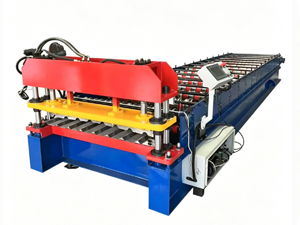
Roof Sheet Curving Machine: How Curved and Arched Metal Roofing Is Produced
Not all metal roofs are flat. From agricultural barns with curved barrel vaults to airport terminals with sweeping arched canopies, curved metal roofing is a significant segment of the market—and it requires a different production process than standard flat panels. The machine that makes it possible is the roof sheet curving machine.
This article explains how curved metal roofing panels are produced, where they are used, and what the curving process means for material selection and panel performance.
Why Curve a Metal Roof Sheet?
Curved roofs serve both functional and aesthetic purposes. On the functional side, a curved profile—like a barrel vault or continuous arch—provides superior structural performance compared to a flat panel on the same span, because the curved geometry distributes loads more efficiently. On the aesthetic side, curved roofs break the visual monotony of flat planes and are a defining feature of many architectural styles from agricultural vernacular to contemporary aviation terminals.
Curved metal panels are also used for cylindrical and domed structures—silos, tanks, water towers, and architectural domes—where the panel must conform to a compound curved surface. In these applications, the panel is not just bent in one direction but may need to accommodate curvature in two planes.
How Roof Sheet Curving Machines Work
Continuous Roll Curving
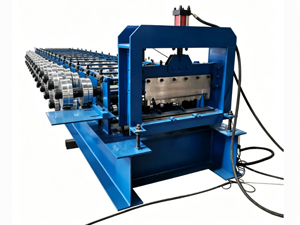
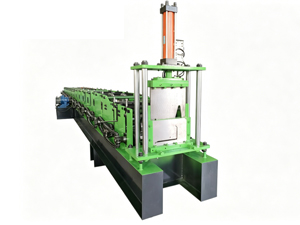
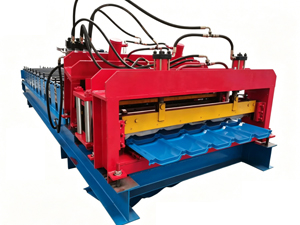
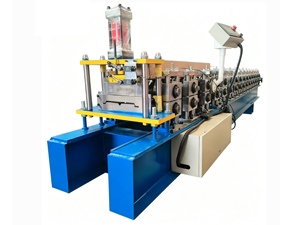
The most common method: a standard trapezoidal or ribbed roof panel is passed through a pair of opposed forming rollers where the distance between the rollers is gradually reduced, forcing the panel to bend along its length into a curved profile. This is the same principle as a plate roll, but adapted for the narrower widths and ribbed geometries of roof panel profiles.
Continuous roll curving produces a gentle, consistent radius along the full panel length. The radius is controlled by the roller gap setting. Some machines can produce both convex (curving upward, like a barrel vault) and concave (curving downward, like an interior ceiling) bends on the same machine.
Stepped Curving (Incremental Bending)
For tighter radii that cannot be achieved by continuous roll curving, a stepped or incremental bending approach is used. The panel is bent at successive stations, each adding a small amount of curvature, until the target radius is achieved. This is similar to how a paper folder works—many small folds produce a smooth curve. Stepped curving requires more forming stations but achieves tighter radii than continuous roll curving.
Press Curving (Brake-Forming)
For panels with complex geometries or compound curves, press curving uses a press brake with a curved die to bend the panel along a specific line. This method is slower than roll curving and is used for special profiles or small production runs where setting up a dedicated roll curving line is not justified.
Key Machine Specifications
Curvature range: The minimum and maximum radius the machine can produce. Minimum radius is typically expressed as a multiple of material thickness—for standard galvanized steel, the minimum bend radius is approximately 1.5–2 times the thickness. A machine that can produce a 500 mm radius on 0.5 mm steel can produce the same radius on 0.8 mm steel only if it has more forming force.
Panel width range: The machine must accommodate the panel widths you intend to produce. Standard roof panel widths range from 600 mm to 1,250 mm.
Material thickness range: Curving thick material requires more force. Confirm the machine is rated for the thickness you need—typically 0.4–0.8 mm for most roof applications.
Convex and concave capability: Some machines can only curve in one direction. Confirm whether you need both convex and concave curving.
Forming speed: Continuous roll curving typically runs at 5–15 m/min depending on the radius and material. Tighter radii may require slower speeds to avoid surface cracking or coating damage.
Material Implications of Curving
Curving affects the material in ways that must be considered during specification:
Coating Strain
When a flat panel is curved, the outer surface stretches and the inner surface compresses. This strain can cause the zinc or Galvalume coating to crack at the bend, particularly at the tightest point of the curve. For pre-painted panels, the paint coating can also crack. The risk increases with tighter radii and higher yield strength materials. Testing a sample of your material at the target radius before committing to production is strongly recommended.
Springback
Like all cold bending operations, curved panels spring back slightly after curving. The machine must be set to over-curve slightly beyond the target radius to compensate. Springback is more pronounced with high-yield-strength materials and must be verified with a test piece.
Material Grade Suitability
Low-carbon galvanized steel (yield 235–280 MPa) is the easiest material to curve—it bends cleanly with minimal springback and coating cracking. High-strength low-alloy (HSLA) steels with yield above 350 MPa are more difficult to curve and require more force, more stations, and careful control of coating strain.
Applications for Curved Metal Roofing
Agricultural Buildings
The curved barrel vault—typically a continuous corrugated or trapezoidal sheet curved to a large radius—is the classic agricultural metal roof. The curved profile provides better spanning capability than a flat panel of the same thickness, the shape is aesthetically appropriate for agricultural settings, and the construction is fast and cost-effective. Radii of 3–15 m are common for agricultural arched buildings.
Commercial and Industrial Canopies
Large-span curved canopies at building entrances, car ports, and walkway covers use curved roof panels to achieve the required architectural form. Spans of 10–30 m are common, with the curvature providing the structural depth needed to resist wind and snow loads.
Architectural Buildings
Contemporary architecture frequently uses curved metal cladding panels to achieve flowing roof forms. The panels are typically standing seam, and the curves can be complex—concave and convex in sequence, varying radius, or compound curves on domed structures. These applications require close collaboration between the architect, the structural engineer, and the panel producer to ensure the panels can be fabricated to the required tolerances.
Silos, Tanks, and Industrial Structures
Cylindrical storage structures—silos, grain bins, water tanks, and industrial process vessels—use curved metal panels as the primary wall and roof structure. The panels are curved to the radius of the vessel, and adjacent panels are joined with overlapping seams or bolted connections. Curved panels for silos are typically corrugated or ribbed for added structural stiffness against the internal and external pressure loads.
Curved vs Flat Panels: When to Choose Each
Choose curved panels when: the architectural design requires a curved roof form, the structural span is large enough that a curved profile provides meaningful spanning advantage over a flat panel, or the project aesthetic requires the characteristic appearance of a curved roof.
Choose flat panels when: the roof is essentially flat or low-slope (curving adds cost and complexity for no structural benefit), the profile is standing seam or a complex profile that cannot be easily curved, or the project budget does not justify the additional cost of curving.
Frequently Asked Questions
Q: Can any roof panel profile be curved?
Most profiles can be curved to some degree, but the tighter the rib geometry and the thicker the material, the more difficult the curving. Corrugated and low-rib trapezoidal profiles curve most easily. High-rib standing seam profiles are more challenging because the rib geometry resists bending.
Q: Does curving damage the galvanized or Galvalume coating?
It can, particularly at tight radii and on high-strength materials. The coating may crack at the tightest point of the curve. For pre-painted panels, the paint coating is also at risk. Always test a sample of your material at the target radius before production. Galvalume is generally more resistant to coating cracking than standard galvanized steel.
Q: What is the minimum radius for curving a 0.5 mm galvanized roof panel?
The practical minimum radius is approximately 3–5 times the material thickness, or roughly 1.5–2.5 m for 0.5 mm material. Tighter radii are possible but risk coating damage and excessive springback.
Q: Can the same machine produce both convex and concave curves?
Not all machines. Some continuous roll curving machines can produce both by reversing the roller configuration. Confirm with the supplier whether the machine you need handles both directions.
Conclusion
Curved metal roofing panels are a specialized product that expands the design possibilities of metal roof systems into architectural forms that flat panels cannot achieve. Understanding the curving process—the methods, the machine capabilities, and the material implications—helps architects, engineers, and buyers specify curved panels correctly and avoid production problems on site.
Tianyu manufactures roof sheet curving machines for agricultural, commercial, and industrial applications, with configurations for panel widths from 600 mm to 1,250 mm and material from 0.4 mm to 0.8 mm thickness. Share your target radius and panel profile for a tailored configuration proposal.
Sources: MCA (Metal Construction Association) Metal Roof Systems Design Manual; AISI Cold-Formed Steel Design Manual; NRCA (National Roofing Contractors Association) Metal Panel Roof Systems Manual; SCI Steel Knowledge: Curved Cladding Systems; ISO 10721-1:2005 Steel Sheet for Cold-Formed Sections.






 首页
首页 产品
产品 联系
联系
