

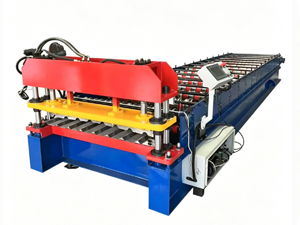
Bending Machine for Steel Fabrication: Press Brake vs Folding Machine vs Profile Bender
Not all steel bending machines are the same—and using the wrong one for your application is an expensive mistake. A press brake bends sheet; a folding machine bends sheet and light plate; a profile bender bends sections and tubes. Each has a different capability range, a different price point, and a different set of applications where it excels.
This guide explains the three main types of bending machines used in steel fabrication, what each one is designed to do, and how to choose the right machine for your workshop.
Press Brakes: The Sheet Bending Workhorse
A press brake bends sheet metal by pressing a punch (the upper tool) into the sheet against a die (the lower tool) mounted on a bed. The sheet is forced into the V-shaped opening of the die, creating a bend along the sheet length. Press brakes are classified as mechanical (crank-driven) or hydraulic (hydraulic cylinder-driven), with hydraulic being the dominant type for modern fabrication shops.
Press brakes are specified by tonnage and bed length. A 100-tonne / 3,000 mm press brake can bend sheets up to 3,000 mm long and up to approximately 6–8 mm thickness in mild steel (capacity decreases with material thickness and tensile strength). Smaller machines (30–50 tonnes, 1,500–2,000 mm) handle light fabrication and are common in general engineering workshops.
The key advantage of a press brake is flexibility: by changing the punch and die tooling, the same machine can produce a wide range of bend angles and bend radii. The limitation is that press brakes are designed for sheet—typically up to approximately 10–12 mm thickness. Above this, the tonnage required exceeds what most press brakes can deliver, and plate rolling or structural bending methods become more appropriate.
Folding Machines: The Panel and Plate Folder
A folding machine—also called a folder or plate folder—bends sheet by clamping the material between a clamping beam and a folding beam, then rotating the folding beam up to close the sheet against a bed. The result is a bend created by folding rather than pressing.
Folders produce a different bend characteristic from press brakes: the bend has a tighter inner radius and a cleaner fold line, which is desirable for architectural and cosmetic applications. Folders are commonly used for producing box sections, lids, and panels where the folded edge appearance matters.
The limitation of folding machines is flexibility: the machine is set up for a specific panel thickness and bend angle, and changing tooling takes longer than on a press brake. Folders are better suited to high-volume, repeat-production environments where the same bends are run repeatedly, rather than job shops that need to change between different profiles frequently.
Profile Benders: For Sections and Tubes
Profile benders bend structural sections, tubes, and bars—the work that press brakes and folding machines cannot do. There are two main types: rotary-draw benders (which rotate the workpiece around a fixed die) and induction benders (which heat a localized zone of the section before bending it).
Rotary-draw benders are the most common type for light and medium steel fabrication. The section is clamped in a chuck, a wiper die supports the outer radius during bending, and the section is drawn around a radius die. The result is a clean bend with minimal distortion of the section shape. Rotary-draw benders handle angles, channels, square and rectangular tubes, and solid rounds and flats.
Induction benders are used for large structural sections where rotary-draw bending would cause excessive distortion. The section is heated by an induction coil along a narrow band, and the heated zone is bent between two end anchor points. Induction bending is common for architectural steelwork, crane boom sections, and large tube bending.
Hydraulic Press Brakes: The Dominant Fabrication Machine
For most steel fabrication workshops, a hydraulic press brake is the primary bending machine. Modern hydraulic press brakes come with CNC back gauges (programmable stop positions for repeated bends), crowning systems (compensation for the natural deflection of the machine frame under load), and advanced control systems that store bend sequences for different products.
Key specifications for a hydraulic press brake include: tonnage capacity (100–400 tonnes for most fabrication shops), bed length (2,000–4,000 mm), throat depth (the distance from the column to the center of the bed, which limits the depth of boxes and pans you can bend), stroke and open height (the vertical clearance between the ram and the bed), and back gauge axes (2-axis basic, 4-axis for complex work, 6+ axes for fully automated multi-bend sequences).
Choosing the Right Machine for Your Workshop
Sheet metal fabrication (enclosures, brackets, covers, architectural panels): A hydraulic press brake is the right choice. It handles the widest range of sheet thicknesses and bend angles, and the flexibility of punch and die tooling means one machine serves many different products.
High-volume box and panel production: A folding machine or a dedicated press brake with automatic tool changer may be appropriate. The fold quality is superior for visible panel edges, and the machine is fast for repeat production.
Structural steel bending (sections, tubes, angles): A rotary-draw profile bender is required. Press brakes cannot bend sections—the geometry does not work. For large structural sections, an induction bender or dedicated structural bending press may be needed.
Heavy plate bending (above 12 mm): A plate rolling machine (pyramid rolls or initial pinch rolls) or a heavy press brake with adequate tonnage for the specific plate thickness. Standard fabrication press brakes are not designed for plate work.
CNC vs Manual Press Brakes
CNC press brakes with programmable back gauges are now the standard for any workshop producing more than 50 bends per week. The back gauge moves to the correct position automatically for each bend in a sequence, eliminating the setup time and error risk of manual gauge positioning. For repeat orders, storing the bend sequence in the CNC memory means the setup time for a repeat job is near-zero. For one-off work, the CNC's graphical programming interface makes manual data entry straightforward.
Manual press brakes without CNC gauges are appropriate for very low-volume workshops or for simple single-bend operations where the investment in CNC is not justified by the production volume.
Frequently Asked Questions
Q: Can a press brake bend structural sections like C-channels?
No—not in the way you would expect. A press brake bends flat sheet. Bending a C-channel on a press brake would require two separate bends (flange up and flange down) that leave a visible seam at the web. For structural sections, use a profile bender.
Q: What is the difference between a press brake and a plate rolling machine?
A press brake makes straight bends along a line across the sheet. A plate rolling machine bends the entire sheet along its length, producing curves or cylinders. They are different machines for different purposes. Some machines (combination brake-rolls) can perform both functions, but neither does both as well as a dedicated machine.
Q: What tonnage press brake do I need for 3 mm mild steel?
Approximately 40–60 tonnes, depending on the die width and bend length. Consult the press brake bending force chart for the specific material grade and thickness before specifying the machine.
Q: Can a folding machine handle the same work as a press brake?
Partially. Folders produce excellent fold quality on sheet but are less flexible than press brakes for varied product runs. For a workshop doing many different products, a press brake is more versatile. For a workshop making the same box sections repeatedly, a folder is faster.
Conclusion
The right bending machine for your workshop depends on what you actually need to bend: sheet, panels, or sections. A hydraulic press brake covers the broadest range of sheet fabrication applications. A profile bender handles sections and tubes that a press brake cannot touch. Understanding these distinctions—and avoiding the temptation to buy a press brake and use it for everything—will give you better results and lower tooling costs.
Tianyu offers hydraulic press brakes and profile benders for light and medium steel fabrication workshops, with configurations from 30 tonnes to 400 tonnes and bed lengths from 1,500 mm to 4,000 mm.
Sources: SME (Society of Manufacturing Engineers) Fabrication Handbook; ISO 6935 Steel for the Reinforcement of Concrete; ASTM A6/A6M Standard Specification for General Requirements for Rolled Structural Steel Bars, Plates, Shapes, and Sheet Piling; Machinery's Handbook, 30th Edition, Section on Press Brake Operations.
next:none






 首页
首页 产品
产品 联系
联系
