

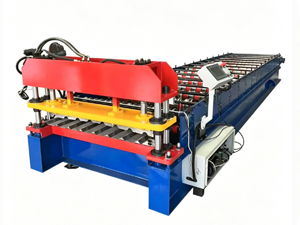
Double Layer 840/900 Roll Forming Machine: Save Space and Cost
The Value of a Two-in-One Line
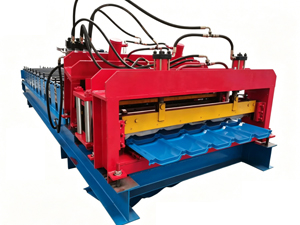
A double layer machine shares one base, one drive, and one control between two profiles, so you get two product lines in roughly the floor space of one.

For shops with limited hall area or mixed 840/900 demand, that space saving often decides whether a second product is even feasible.
How the Double Layer Machine Works
The line carries an upper pass for one profile and a lower pass for the other, with the former switching the active pass by recipe. Only one profile runs at a time, but changeover is near instant.
The double layer tile press 840/900 commonly pairs a trapezoidal 840 with a 900 corrugated or tile profile, covering most residential and workshop roofing from one machine.
Matching the Line to Your Product Mix
If 840 and 900 dominate your quotes, a double layer line is ideal. If one profile is rare, a single former plus occasional outsourced runs may be cheaper than the dual pass.
Confirm both profiles use the same coil width and thickness so you are not rethreading the uncoiler for every switch, which would erase the speed advantage.
Evaluating Space and Output Metrics
Measure saved floor area and operator count, not just price. A double layer line typically frees a full machine bay and lets one operator run both products.
Confirm line speed for each profile and that the cut-to-length works for both passes. Speed should stay close to a single-profile former on either selection.
Procurement and Verification Standards
Request both profile drawings, effective widths, and sample sheets in your gauge. Verify the pass switch is recipe-driven and that the PLC stores both setups.
Check roller material and spare availability for both profiles, since you now depend on one frame for two product families.
Common Pitfalls in Double Layer Sourcing
A pitfall is assuming both profiles share coil width when they do not, forcing rethreading that kills the speed gain. Validate coil compatibility before purchase.
Another is under-sizing the drive. Running two passes in one frame needs enough power and rigidity; a weak frame chatters on the thicker profile.
Single vs Double Layer Framework
Use the comparison below to justify the upgrade. The double layer line costs more but removes a second machine and bay.
| Factor | Two Single Lines | Double Layer 840/900 | Impact |
|---|---|---|---|
| Floor space | Two bays | One bay | Saves area |
| Operators | Two | One | Lower labor |
| Profiles | One each | 840 and 900 | Mixed demand met |
| Changeover | None | Recipe switch | Near instant |
| Cost | Higher total | Medium | Lower total |
Frequently Asked Questions
What is a double layer 840/900 roll forming machine?
It is a two-in-one line with an upper and lower roll pass, producing either the 840 or the 900 roof profile by selecting the active pass. One frame serves two products.
Can it run both profiles at the same time?
No, one profile runs at a time, but switching is near instant via recipe. That is enough for mixed orders because you are not reconfiguring stands between jobs.
Do 840 and 900 share the same coil?
They should for the speed advantage. Confirm both profiles use the same coil width and thickness so you avoid rethreading the uncoiler on every switch.
Is a double layer machine slower?
A well-built double layer line runs close to single-profile speed on either pass. Confirm rated speed for both profiles and that cut-to-length works for each.
Who should buy a double layer machine?
Shops with strong 840 and 900 demand and limited space. Single-profile shops with steady volume may prefer a simpler, dedicated former.
How do I verify a double layer machine?
Request both profile drawings and sample sheets, confirm recipe-driven pass switching, and check roller material and spare availability for both profiles.
Conclusion
A double layer 840/900 roll forming machine is the efficient answer for shops that must offer both profiles without doubling space, labor, and maintenance.
See the double layer roll forming machine from Tianyu Machinery and tell our team your 840/900 volume so we can size the drive and passes correctly.
next:none






 首页
首页 产品
产品 联系
联系
