

Standing Seam Roof Machine: Snap-Lock and Clip Systems Guide
The Value of Standing Seam Systems
Standing seams lift the fastener above the water line and hide it under the seam, giving excellent water tightness on low slopes where screwed panels struggle.
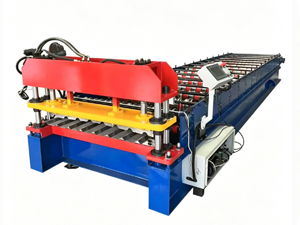
Because panels run long and clip freely, the roof breathes with thermal movement instead of stressing screws, which is why standing seam lasts decades on large buildings.
Snap-Lock vs Clip-Lock Seams
Snap-lock panels have a male and female leg that click together by hand or with a light seamer, often with a fixed clip. Clip-lock uses a separate sliding clip engaged by a powered seamer.
Clip-lock allows more thermal movement and higher seam heights, suiting long roofs. Snap-lock installs faster on moderate slopes where extreme movement is not expected.
Matching Machine to Roof Type
For retail and school roofs with moderate slope, a snap-lock standing seam machine is fast to install and cheaper to equip. For airports, warehouses, and long low-slope spans, clip-lock is the stronger spec.
Confirm the panel width and seam height the machine produces. Standing seam panel widths vary, and the seamer must match the exact seam profile.
Evaluating Seam Height and Movement
Seam height drives both water tightness and clip travel. Taller seams allow longer panel runs before thermal stress, but need a capable seamer and careful clip spacing.
Ask the supplier for the panel's allowable thermal movement and pair it with the clip type. A standing seam roof machine is only as good as the seam-and-clip system it supports.
Procurement and Verification Standards
Request the seam cross-section, panel width, and a sample in your thinnest gauge. Verify the seamer is included and matches the seam, since an unmated seamer leaves the roof open.
Confirm the line stores multiple seam recipes if you plan several profiles, and that spare roller drawings ship with the machine for local tooling reorder.
Common Pitfalls in Standing Seam Sourcing
A frequent error is buying a snap-lock line for a project that needs clip-lock movement, then failing uplift or thermal specs. Match the seam family to the roof's movement demand.
Another is treating the seamer as optional. Standing seam panels are not watertight until seamed, so the seamer is part of the machine, not an add-on.
Snap-Lock vs Clip-Lock Framework
Use the table below to brief clients or choose your line. Both are standing seam; the fit follows slope, span, and movement.
| Factor | Snap-Lock | Clip-Lock | Impact |
|---|---|---|---|
| Installation | Fast, light seamer | Powered seamer | Snap-lock quicker |
| Thermal move | Moderate | High | Clip-lock for long roofs |
| Seam height | Lower | Higher | Clip-lock for low slope |
| Cost | Lower line cost | Higher line cost | Snap-lock cheaper |
| Best use | Moderate slopes | Large low-slope roofs | Match project |
Frequently Asked Questions
What is a standing seam roof machine?
It is a roll forming line that produces long metal panels with tall interlocking seams fixed by hidden clips. The panels are seamed on site to make a screw-free, watertight roof.
What is the difference between snap-lock and clip-lock?
Snap-lock panels click together with light tooling and suit moderate slopes; clip-lock uses a sliding clip and powered seamer, allowing more thermal movement for long, low-slope roofs.
Which standing seam system is best for low slope?
Clip-lock is generally preferred for low-slope and large roofs because its taller seam and sliding clip handle more movement and uplift. Snap-lock fits moderate slopes with faster install.
Do I need a seamer with the machine?
Yes. Standing seam panels are not watertight until the seam is closed. Buy a seamer that matches the exact seam profile, either hand or powered depending on volume.
Can one machine make both seam types?
Usually not with the same roller set, because the seam geometry differs. Some lines offer changeable cassettes; confirm cassette availability with the supplier.
How do I verify a standing seam machine?
Request the seam cross-section, panel width, and a thin-gauge sample. Confirm the seamer matches the seam and that spare roller drawings are supplied.
Conclusion
Standing seam roofing rewards the right seam choice: snap-lock for faster installs on moderate slopes, clip-lock for movement and uplift on large low-slope roofs.
Talk to Tianyu Machinery about a standing seam roll forming machine matched to your seam family, panel width, and seamer, and request a sample seam before you order.






 首页
首页 产品
产品 联系
联系
