

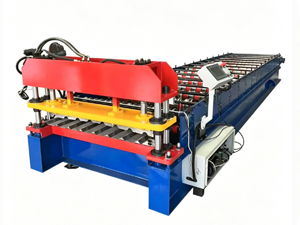
Corrugated Sheet Roll Forming Machine: Agricultural Applications and Why Farms Choose Steel Over Traditional Materials
Agricultural buildings face conditions that would destroy many roofing and cladding materials. Barns fill with ammonia from livestock waste. Grain storage facilities see high humidity and temperature swings. Greenhouses require light transmission while managing heat. Machinery sheds sit idle for months and then get hammered during harvest season. The materials that perform in these environments need to be durable, cost-effective, and practical to install—and more and more, corrugated steel sheets produced on roll forming machines are winning that competition against traditional alternatives.
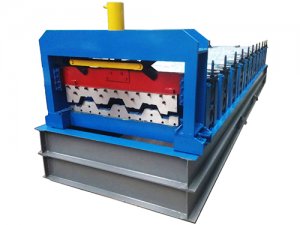
Why Corrugated Steel Dominates Agricultural Roofing
The corrugated profile is one of the oldest load-distribution geometries in building. Corrugating a flat sheet dramatically increases its stiffness perpendicular to the corrugation direction, which allows thinner material to span further between supports. A 0.4mm corrugated steel sheet can span 1.2 to 1.5 meters between purlins; an equivalent flat sheet of the same thickness would sag under its own weight within a fraction of that distance.
The profile also creates natural drainage channels. Water runs down the corrugations and off the eaves without pooling, which matters in buildings where condensation from livestock and feed is a constant challenge. The air gap between the peaks of adjacent sheets, when correctly overlapped, provides a degree of weatherproofing that does not rely on sealant or gasket compounds that degrade over time.
Common Agricultural Applications for Corrugated Sheets
Steel barns and livestock shelters: corrugated steel walls and roofs are standard in cattle barns, poultry houses, and general-purpose farm storage. The material is non-combustible—a significant safety advantage in buildings storing hay and feed that are highly flammable—and it does not harbor the mold and bacteria that porous materials like wood accumulate.
Grain and produce storage: corrugated steel silos and storage buildings need to be weathertight and vermin-resistant. Steel sheets, properly jointed and sealed, provide both. Roll formed panels can be cut and formed to size on site, which is useful in rural areas where transport of large pre-made panels is impractical.
Greenhouses: galvanized corrugated sheets are sometimes used for the roof and walls of utilitarian greenhouses where light transmission is not the primary concern—headhouses, storage sections, and cold-frame extensions. In higher-specification greenhouses, translucent corrugated polycarbonate or fibreglass replaces steel in the growing area, but steel sheets form the structural end walls and roof sections.
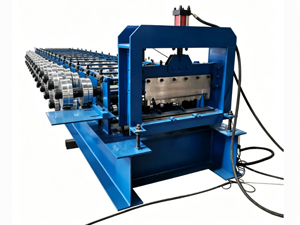
Machinery and equipment sheds: farm equipment sheds are among the most demanding applications because they combine large spans, high doors, and occasional vehicle impact. Corrugated steel on a robust steel frame is the standard solution, and a roll forming machine that can produce wide, thick-gauge sheets for these applications is a valuable asset for any agricultural material supplier.
What a Corrugated Sheet Roll Forming Machine Needs for Agricultural Work
Agricultural projects often require larger sheets than commercial roofing—spans can be 20 meters or more in a large barn, which means the sheets need to be wide and structurally stiff. A standard corrugated sheet roll forming machine producing 760mm or 820mm cover width panels is fine for wall cladding, but a roof application on a wide-span building benefits from wider sheets that reduce the number of laps and the associated leak risk.
Some manufacturers offer machines that produce wide corrugated sheets up to 1,000mm or 1,200mm cover width. These require heavier rollers and a more robust frame but can supply the agricultural market more efficiently than smaller-format machines.
The material specification matters significantly in agricultural environments. Standard galvanized steel (Z275) is adequate for many farm buildings in dry climates. In humid environments, near the coast, or in buildings with high ammonia levels (poultry houses, pig facilities), galvalume (aluminum-zinc coated steel, designation AZ150 or AZ200) provides substantially better corrosion resistance. Some manufacturers offer factory-applied anti-condensation coatings on the reverse side, which is useful in uninsulated barns where warm moist air rises and condenses on the cold underside of the roof sheet.
Material Handling on Farms: Why Simpler Is Better
Agricultural buildings are frequently built by local contractors using general labor, not specialist roofing tradespeople. Corrugated steel sheets are forgiving in this context: they can be cut with power tools or even hand snips on site, they overlap in two directions which provides a margin of error for alignment, and the fixing system—self-drilling screws with sealing washers—is straightforward and requires minimal training.
Factory-cut sheets arrive on site pre-cut to length, which eliminates the need for cutting and reduces waste. This is particularly valuable on farms where time and labor are scarce and the contractor may not have sheet metal cutting equipment.
What Agricultural Factories and Suppliers Need from a Machine
A manufacturer or factory supplying agricultural projects needs a roll forming machine that can produce sheets in the widths and lengths that farm construction typically requires. Roof sheets on wide-span barns are often 6 to 12 meters long; wall sheets are 2 to 4 meters. The machine's cutting system must handle these lengths accurately and cleanly.
Color options matter in the agricultural market. Farm operators often prefer green or brown sheets that blend with the rural landscape, especially for buildings in scenic areas or near residential zones where planning authorities require specific colors. A factory with a machine fed by pre-painted coil in standard agricultural colors can command a price premium over a supplier offering only plain galvanized sheets.
Speed is less critical in agricultural supply than in commercial roofing because the orders are often smaller and more varied. A machine that can switch between widths and lengths easily—rather than one optimized for a single high-volume format—serves the agricultural market better.
Connecting with the Agricultural Market
The agricultural construction market is regional and relationship-driven. A factory that can supply quality sheets, deliver reliably, and provide sensible technical advice about profile selection and fixings will build a loyal customer base among farm builders, rural contractors, and agricultural developers. The equipment that supports that service—the roll forming machine, the cutting accuracy, the material specification—is the foundation of that reliability.
References
National Farmers Union. Agricultural Building Standards: Materials and Construction Guidelines. NFU Technical Publications, 2020.
American Society of Agricultural and Biological Engineers. ASABE S492: Farm Building Standards. ASABE, 2019.
British Standards Institution. BS 5502-22: Code of Practice for Design and Installation of Agricultural Buildings. BSI, 2017.
Corrosion Science Society. Corrosion in Agricultural Environments: Material Selection Guidelines. CSS Technical Report, 2021.
Food and Agriculture Organization of the United Nations. Steel in Agricultural Storage Structures: Design and Materials Guide. FAO, 2019.
This article is intended for agricultural industry professionals, farm builders, and material suppliers researching corrugated steel production options.






 首页
首页 产品
产品 联系
联系
