

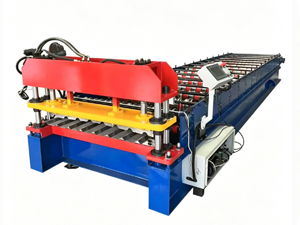
Roll Forming Machine Maintenance: 10 Tips to Extend Life
A roll forming machine is a serious capital investment—and like all precision machinery, its performance and lifespan depend heavily on how consistently it is maintained. Downtime caused by preventable failures is not just an inconvenience; it is a direct hit to throughput and customer delivery commitments.
The good news is that roll forming maintenance is systematic, not mysterious. Follow a structured maintenance checklist, keep the critical components in spec, and your machine will reliably produce thousands of tonnes of profiled steel with minimal interruption.
This guide covers the 10 most impactful maintenance practices, organized by frequency and priority.
Why Roll Forming Machine Maintenance Matters
Roll forming machines operate under demanding conditions: continuous strip feeding, high contact pressures at each roller station, hydraulic punching forces, and frequent profile changeovers. Without regular attention, rollers wear unevenly, shaft bearings degrade, and the entire forming system falls out of alignment—leading to profile errors, surface defects, and eventually catastrophic component failure.
A machine maintained to schedule typically delivers 15–20+ years of reliable service. A neglected machine may require major component replacement within five years.
Tip 1: Daily Lubrication of Roller Bearings
This is the single most important daily habit. Each roller station on a roll forming line contains sealed or semi-sealed bearings that support the shaft under continuous rotational loads. Without adequate lubrication, bearing raceways experience adhesive wear and begin to overheat—eventually seizing or cracking.
Daily check: Apply machine oil or grease (per manufacturer specification) to each roller bearing housing. On machines with automatic lubrication systems, verify that the reservoir is full and the pump is cycling correctly. Watch for unusual noise, raised temperature, or visible wear debris—these are early warning signs that demand immediate investigation.
Tip 2: Inspect Roller Surfaces Before Each Shift
Roller surfaces are the direct forming tools. Any scratch, dent, or buildup of material residue transfers directly to the product. A 0.05 mm scratch on a roller can produce a visible profile defect across an entire production run.
Before starting production, wipe each roller with a clean cloth and inspect under good lighting. Look for lateral scoring marks (indicates material slip or contamination), surface indentations (drop damage or debris in the strip), and adhesive pickup from galvanized or coated steel (clean with approved solvent). Log roller surface condition in your maintenance record with each inspection.
Tip 3: Check Strip Alignment and Entry Guides
The entry guide system—decoiler, straightener, and feeder rolls—sets the foundation for everything downstream. A misaligned entry guide introduces lateral strip movement that compounds through each roller station, producing bowed or twisted profiles that cannot be corrected later in the line.
Before each run: Confirm that the strip runs centered through all entry components. On manual-entry machines, use the centering jigs provided by the manufacturer. On servo-fed machines, verify that the feeder feedback loop is within tolerance.
Tip 4: Verify Hydraulic System Pressure and Fluid Level
On machines equipped with hydraulic punching, cutting, or quick-clamp systems, the hydraulic circuit is mission-critical. Low fluid level introduces air into the circuit, causing spongy actuator response and inaccurate punch positioning. Pressure drops below spec result in incomplete punches or shear failures.
Weekly check: Verify hydraulic fluid level in the tank (sight gauge or dipstick), confirm system pressure matches the nameplate setting, inspect hoses and fittings for leaks, abrasion, or bulging, and check the return filter indicator—replace the cartridge per manufacturer interval (typically 500–1,000 hours). Use only manufacturer-specified hydraulic fluid. Mixing fluid types can degrade seals and alter viscosity characteristics.
Tip 5: Inspect and Adjust Roller Clearance Monthly
Roller clearance—the precise gap between opposing roller surfaces—governs the final material thickness and profile geometry. Over time, thermal cycling, vibration, and bearing wear cause roller spacing to drift.
Monthly procedure: Run a test strip and measure finished profile dimensions with calipers. Compare against specification tolerances (typically ±0.1 mm on key dimensions). If dimensions are out of tolerance, adjust roller spacing using the machine's fine-adjustment screws or shim sets. Re-run test strip and verify compliance before resuming production.
This monthly adjustment cycle prevents cumulative drift that would otherwise require a major realignment of the entire forming line.
Tip 6: Check Roller Shaft Condition and Bearing Play
Roller shafts (typically Ø70–90 mm in diameter on standard machines, made from induction-hardened steel) and their bearings experience the highest cyclic stresses in the machine. Over months and years, radial play develops in the bearing fit, which manifests as profile flutter and dimensional instability.
Quarterly check: With the machine powered off, attempt to rock each roller by hand. Any perceptible lateral play indicates bearing wear. Check the shaft surface for scoring near bearing seats. Replace worn bearings promptly—continuing to run with degraded bearings accelerates shaft wear and damages the bearing housing bore, turning a simple bearing replacement into a full roller cartridge rebuild.
Tip 7: Maintain the PLC and Encoder System
The PLC (Siemens or Delta are standard brands) and rotary encoder on the exit shear are the brain and the nervous system of the machine. Profile accuracy and length control depend entirely on their correct operation.
Every six months: Inspect encoder mounting and cable condition—vibration loosens connectors. Verify encoder alignment: the encoder disc should run centered with no rubbing. Check PLC cabinet for dust buildup and signs of overheating (burnt smell, discolored terminals). Review the alarm log for recurring faults that may indicate intermittent electrical issues.
Temperature and dust are the primary enemies of PLC cabinets in fabrication environments. Keep cabinets closed and consider adding cabinet cooling fans in hot climates.
Tip 8: Inspect the Punching and Cutting System
For machines with inline punching or hydraulic shear cutting, the tooling experiences high impact loads. Punches can chip, die inserts can crack, and cutting blades can dull or chip—all of which degrade product quality or cause jams.
Weekly inspection points: Punch and die clearance (adjust per tooling datasheet), punch seating (verify no movement under load), cutting edge condition on shear blades, hydraulic cylinder rod for scoring or pitting, and clamp and guide alignment for punching stations.
Keep a set of spare punches and die inserts in inventory. Waiting for a replacement part to arrive can cost more in lost production than the part itself.
Tip 9: Keep the Machine Clean
This sounds obvious, but in a steel fabrication environment, swarf, coolant residue, and dust accumulate rapidly. Buildup in roller flutes, guide channels, and encoder housings is a genuine reliability risk.
End-of-shift or end-of-week routine: Blow down the forming area with compressed air (wear safety glasses). Clean material residue from roller flutes using a non-metallic brush. Wipe encoder housing and cable runs. Clear the stacking and discharge area of offcuts and scrap.
A clean machine is also a safer machine. Slippery floor surfaces and tangled scrap are common causes of workplace injuries in fabrication shops.
Tip 10: Schedule Professional Alignment and Overhaul Annually
No amount of daily maintenance replaces the need for periodic professional inspection. An annual service by a qualified technician or the original manufacturer should include a full forming line geometric alignment check (laser or dial indicator method), roller re-grinding or replacement if surface wear exceeds tolerance, electrical system inspection and terminal tightening, full hydraulic system flush and fluid replacement, motor and gearbox inspection, and a full test run with instrumented measurement.
Annual professional service typically costs a fraction of what a single unplanned breakdown or major component replacement would cost.
Common Signs That Maintenance Is Being Neglected
Watch for these symptoms—each is an early warning sign of a component or system reaching the end of its service interval:
Increasing pitch diameter variance across the forming line—roller wear or clearance drift
Fluting marks on strip surface—roller surface contamination or lubrication failure
Hydraulic punch pressure dropping—worn seals or low fluid
Profile bow or twist appearing—alignment drift or entry guide issue
Intermittent encoder alarms—connector or cable issue
Excessive motor current draw—roller bearing failure or material hardness variation
When these symptoms appear, address the root cause immediately.
Conclusion
Roll forming machine maintenance is not optional and it is not complicated—it is systematic. The 10 tips above cover the critical maintenance ground: lubrication, roller inspection, alignment, hydraulic care, electrical health, and professional service cadence.
Keep the checklist on the shop floor. Record every inspection. And when something drifts out of tolerance, act before it fails completely.
If you are evaluating a new roll forming line, ask the manufacturer what their recommended maintenance schedule looks like and whether they offer remote diagnostics or on-site training. A supplier who stands behind their machine with solid post-sale support is worth more than a lower quoted price.
Sources: ISO 2081:2018 Metallic and other inorganic coatings — Electroplated coatings of zinc with supplementary treatments on iron or steel; NFPA (National Fluid Power Association) Hydraulic System Maintenance Guidelines; Lubrication Engineers (LE) International Technical Reference on Rolling Element Bearing Lubrication.






 首页
首页 产品
产品 联系
联系
