

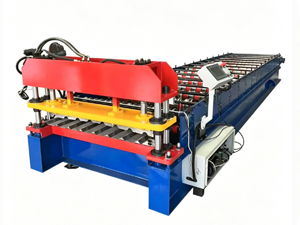
Roll Forming Machine Safety: Operating Standards and Factory Workplace Guidelines
Industrial machinery saves lives when properly designed, but it can cause severe injury when operated without appropriate safety precautions. Roll forming machines, while less dramatic in their hazards than some metalworking equipment, present genuine risks that factories must address systematically. Crushing injuries from the forming section, lacerations from sharp steel edges, entanglement in rotating shafts and rollers, and electrical hazards all appear in the incident histories of poorly managed roll forming operations. This article examines the safety considerations that responsible factories address in their roll forming operations.
Understanding the Hazard Profile
Before implementing safety measures, factories must understand what hazards their roll forming equipment actually presents. This hazard identification process—sometimes formalized as a risk assessment—forms the foundation for effective safety management.
The point of operation hazard—the location where steel strip enters the forming rollers—presents the most severe risk. The forces involved in bending steel are substantial; a finger caught in this zone will be crushed. Even thin strip at high speed can cause friction burns and abrasions that damage skin.
Rotating shafts, coupling elements, and drive components present entanglement hazards if loose clothing, long hair, or jewelry contacts exposed rotating elements. These injuries often occur when operators perform tasks near these components without proper guarding.
Sharp edges on steel strip and cut panels cause laceration injuries that, while rarely life-threatening, can cause significant blood loss and infection risk. The edge condition worsens after cutting operations when the strip end may spring outward unpredictably.
Coil handling during decoiler loading and strip threading presents crush and struck-by hazards. Coils weighing hundreds or thousands of kilograms move with momentum that can trap operators against fixed structures.
Engineering Controls and Machine Guarding
Effective safety management prioritizes engineering controls that eliminate or isolate hazards before relying on personal protective equipment or administrative procedures. Machine guarding represents the primary engineering control for roll forming equipment.
Fixed guards physically prevent access to hazardous zones. For the roll forming section, these guards typically enclose the roller area on three sides with access panels that interlock with machine operation—when opened, the machine stops. Guard materials must withstand impact from any fragments that might be thrown during operation.
Safety light curtains and area scanners detect operator presence in hazardous zones and halt machine operation before contact occurs. These systems offer the advantage of allowing access for material handling and setup tasks while maintaining protection during production runs.
Emergency stop devices positioned at multiple locations around the machine enable rapid shutdown when hazardous conditions develop. Push-button emergency stops should be accessible from all normal operating positions and from any location where maintenance or adjustment tasks occur.
Lockout-Tagout Procedures
Maintenance and adjustment tasks on roll forming equipment require complete energy isolation—the physical disconnection and securing of all energy sources that could cause machine movement or electrical hazard. Lockout-tagout procedures govern this process.
A complete lockout procedure includes identifying all energy sources (electrical, hydraulic, pneumatic, gravitational), isolating each source using appropriate devices, applying lockout devices that prevent re-energization, verifying that isolation is effective before work begins, and releasing stored energy in a controlled manner.
Individual lockout devices ensure that only the person who applied the lock can remove it. This prevents the scenario where an operator assumes the machine is locked out because a colleague told them it was—only to discover the colleague's work is complete and the machine has been re-energized without notification.
Documentation of lockout procedures, training in their application, and regular verification of compliance form the administrative framework that ensures lockout-tagout actually prevents unexpected startup during maintenance.
Personal Protective Equipment Requirements
When engineering controls cannot eliminate exposure to hazards, personal protective equipment provides the final layer of protection. For roll forming operations, typical PPE requirements include:
Safety glasses or goggles protect against flying fragments from cutting operations, metal fragments during material handling, and dust from compressed air cleaning operations.
Cut-resistant gloves—specifically rated for metal handling—protect against sharp edges while maintaining adequate dexterity for material manipulation. Standard leather work gloves offer limited cut resistance and may be inadequate for handling sharp strip edges.
Steel-toed footwear prevents crush injuries from dropped panels and coils. Slip-resistant soles address the oil and coolant that inevitably accumulate on factory floors.
Hearing protection may be required if ambient noise levels exceed 85 decibels during normal operation, particularly during high-speed cutting or when processing thicker materials.
Operating Procedures and Training
Systematic operating procedures translate equipment capabilities and limitations into step-by-step guidance for machine operators. These procedures should address normal operation, material changeover, routine maintenance, and response to common fault conditions.
Operator training should verify that trainees can demonstrate safe operation before assuming independent responsibility. Initial training covers basic operation, emergency procedures, and PPE requirements. Ongoing training addresses updates to procedures, lessons from incident investigations, and new equipment or product types.
Supervisor observation and feedback reinforce safe work practices and identify operators who develop unsafe habits. Regular safety meetings provide forums for discussing concerns, sharing lessons from near-misses, and reinforcing organizational commitment to safety.
Material Handling Safety
Roll forming production involves repeated material handling tasks that accumulate injury risk over shifts and years. Systematic attention to material handling reduces these risks.
Coil handling requires appropriate lifting equipment—overhead cranes, fork trucks, or specialized coil handling equipment—matched to coil weights and facility layout. Operators should understand load rating, inspection requirements, and proper attachment techniques.
Strip threading through the forming section presents pinch point hazards that increase as the operator guides the leading edge through successive roller stations. Using strip insertion aids and maintaining three-point contact with the coil during threading reduces entanglement risk.
Finished panel handling involves large, potentially unwieldy pieces with sharp edges. Panel carts, bundle handling equipment, and designated stacking areas prevent the strains and crush injuries that occur when workers handle panels manually.
Incident Reporting and Investigation
Even in well-managed operations, incidents and near-misses occur. Systematic reporting and investigation processes identify root causes and drive improvement.
Near-miss reporting—incidents where injury almost occurred but did not—provides learning opportunities before actual injuries happen. Creating a culture where workers report near-misses without fear of punishment encourages early identification of hazards.
Incident investigation moves beyond assigning blame to understanding why safeguards failed or were not applied. Root cause analysis techniques identify systemic factors—training gaps, equipment design, procedure inadequacy—that, if corrected, prevent recurrence.
Trend analysis across incidents and near-misses reveals patterns that individual investigations might miss. If multiple incidents involve the same task or equipment, targeted improvement addresses the underlying risk.
Regulatory Compliance Framework
Factory roll forming operations typically fall under general industry safety regulations that establish minimum requirements for machinery safety, electrical safety, and workplace conditions. While specific requirements vary by jurisdiction, the framework of hazard identification, control implementation, and verification applies universally.
Regular safety audits—either internal or by third-party specialists—verify that implemented controls remain effective and that regulatory compliance is maintained. Audit findings drive corrective actions that close gaps before they result in incidents.
Documentation of safety management activities—training records, inspection logs, incident reports, maintenance records—provides evidence of due diligence and enables analysis that improves safety performance over time.
References
Occupational Safety and Health Administration. Machine and Machine Guarding: 29 CFR 1910.212. OSHA, 2021.
Occupational Safety and Health Administration. Control of Hazardous Energy (Lockout/Tagout): 29 CFR 1910.147. OSHA, 2021.
International Organization for Standardization. ISO 12100: Safety of Machinery — General Principles for Design. ISO, 2010.
National Safety Council. Machine Safety in Manufacturing: Guidelines for Risk Assessment and Control. NSC, 2020.
American Society of Safety Professionals. Fall Protection and Machine Guarding: Practical Implementation Guide. ASSP, 2021.






 首页
首页 产品
产品 联系
联系
