

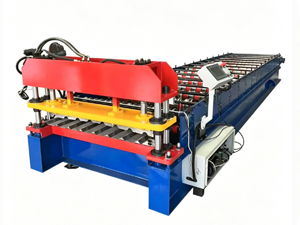
: Fabrication Techniques for Construction Metalwork and Factory Operations
Sheet metal bending ranks among the most fundamental metalworking operations in construction fabrication. Every architectural trim piece, structural connection plate, and custom metal component begins as flat steel that a bending machine shapes into three-dimensional form. While roll forming excels at producing long, constant-profile sections, bending machines handle the short-run, high-variation work that constitutes a significant portion of what steel fabrication factories actually do. This article examines how modern bending machines work, what factors affect bend quality, and how fabrication shops optimize their bending operations for construction metalwork.
The Mechanics of Air Bending and Bottoming
The two primary bending methods—air bending and bottoming—offer different trade-offs between precision, force requirements, and tooling cost. Understanding when each method applies helps factories choose equipment and develop appropriate quality expectations.
Air bending uses a punch and die with clearance between them, allowing the material to bend without fully contacting the die walls. The final angle depends on the depth of punch penetration, not the die geometry. This method requires less tonnage than bottoming, accommodates angle variations within a single setup, and allows angle compensation for material springback. The trade-off is reduced angular accuracy compared to bottoming.
Bottoming forces the material against the die walls, producing a consistent bend angle determined by the die geometry rather than punch penetration depth. This method yields more accurate angles but requires significantly higher press tonnage—typically 1.5 to 2 times the air bending force for the same material thickness and profile.
Coining, a third method, compresses the material at the bend location to achieve the tightest tolerances, but the extreme force requirements limit its use to thinner materials and specialized applications.
Tonnage Calculations and Machine Selection
Selecting the right bending machine capacity requires understanding the relationship between material properties, profile geometry, and forming force. The standard tonnage formula for air bending accounts for material tensile strength, sheet length, die opening width, and material thickness.
For mild steel with a tensile strength of approximately 450 MPa, a standard formula suggests roughly 35 tonnes of force per meter of bend length when using a die opening equal to 8 times the material thickness. This means a 3-meter-long bend on 3mm steel requires around 315 tonnes of press capacity—well within range for most medium-duty fabrication presses.
Longer bends, thicker material, and tighter die openings increase force requirements proportionally. Fabricators processing structural steel plates or heavy architectural panels must select presses with adequate capacity rather than attempting to force bends beyond the machine's capability.
Die Selection for Construction Profiles
Construction metalwork often involves bending profiles that are not simple flat sheets. Flanges, hems, joggles, and return legs change the effective bending geometry and require thoughtful tooling selection.
The die opening width determines the inner bend radius for a given material. Standard practice uses a die opening equal to 6 to 12 times the material thickness, with narrower openings producing tighter radii but requiring higher tonnage. For most construction applications, an 8-times-thickness die opening provides a reasonable balance.
Acute angle bends—inward-facing bends where the die opening narrows—present particular challenges because the material tends to buckle or wrinkle during bending. Specialized acute dies with relief geometries handle these profiles more reliably than standard tooling.
V-dies with different opening angles accommodate various bend angle requirements. Standard 90-degree dies serve most construction applications, while gooseneck punches with extended body length reach into recessed areas without interference from the press frame.
Material Considerations and Springback Compensation
Different steel grades bend differently, even at the same thickness. Higher-strength low-alloy steels require more force and exhibit greater springback—the tendency of bent material to partially return toward its original flat shape when the punch releases.
Springback compensation techniques include overbending by a calculated angle, using compression pads or urethane springs on the outer surface of the bend, and sequential multi-pass bending that gradually achieves the target angle. Modern CNC press brakes with angle measurement systems can automatically compensate for springback based on material sample testing.
Galvanized coatings increase the effective thickness and change the friction characteristics of the material surface, affecting both forming force and surface quality. Pre-painted materials introduce additional considerations around paint cracking at the bend location, particularly with high-gloss finishes on tight radii.
CNC Control Systems and Precision Bending
CNC press brakes have transformed bending accuracy from a skill-dependent art into a programmable, repeatable process. A modern CNC press brake with a backgauge system—programmable stops that position the workpiece accurately for sequential bends—achieves positional accuracy within 0.1mm consistently.
Modern control systems incorporate material database functions that store parameters for different steel grades and thicknesses, including specific springback compensation values. Once a particular bend configuration has been validated with sample parts, the machine can repeat that bend thousands of times with consistent results.
Angle measurement systems using capacitive or laser-based sensors provide in-process angle verification, adjusting the punch depth automatically if the bent angle deviates from target. These systems prove particularly valuable for high-precision architectural work where cumulative errors across multiple bends accumulate into visible quality problems.
Safety Considerations for Bending Operations
Bending machines present several safety hazards that fabrication factories must address systematically. The press closing force alone—measured in hundreds of tonnes on larger machines—can cause severe crushing injuries without proper guarding and operating procedures.
Point-of-operation guarding prevents operator access to the pinch point during the bending cycle. Light curtains, laser scanners, and physical barriers each provide different levels of protection and operator convenience. The appropriate solution depends on the production rate requirements and regulatory environment.
Operator training should cover load and unload techniques that minimize hand placement near the pinch point, proper material handling for awkward or heavy workpieces, and lockout-tagout procedures for maintenance operations.
Applications in Construction Metalwork
Construction fabrication bending operations produce a wide range of components:
Architectural trim and flashing pieces often require complex multi-angle bending to fit specific building geometries. Custom architectural metalwork factories specialize in these short-run, high-variety projects.
Structural connection plates, gussets, and stiffeners frequently involve bending operations to create web-to-flange connections or mounting configurations. These components may be specified by engineers or developed by fabricators as part of their standard practice.
Equipment bases and supports often combine bent plate with welded fabrication to create mountings for mechanical and electrical equipment in buildings and industrial facilities.
Signage frames and decorative panels incorporate bent sheet metal as structural backing and mounting systems for exterior signage and building identification.
Optimizing Factory Bending Operations
Factories achieving high productivity from their bending operations share common characteristics: thorough job planning before setup, efficient sequencing of operations, and systematic attention to tooling maintenance.
Job planning includes reviewing drawings to identify all bends, determining the optimal bend sequence that avoids interference and minimizes repositioning, and calculating tonnage requirements to verify machine capacity before loading the job.
Batch processing of similar bends—grouping all 90-degree bends on one job, for example—reduces tool changes and improves overall efficiency, though the constraint of processing work in priority order often overrides this optimization.
Regular tooling inspection and replacement maintains bend quality. Worn die edges produce inconsistent bend angles and surface scratches on the material. Factories that schedule tooling inspection as part of routine maintenance rather than waiting for quality problems to appear achieve more consistent output.
References
Fabricators and Manufacturers Association International. Fundamentals of Tooling for Bending and Seaming. FMA Technical Publications, 2019.
Canadian Sheet Steel Building Institute. Steel Bending: Technical Guide for Cold-Forming Operations. CSSBI B-01. CSSBI, 2018.
European Committee for Standardization. EN 1993-1-3: Eurocode 3: Design of Steel Structures — Cold-Formed Thin Gauge Members and Sheeting. CEN, 2006.
Occupational Safety and Health Administration. Machine Guarding Standards: 29 CFR 1910.212. OSHA, 2021.
Society of Manufacturing Engineers. Press Brake Operation and Safety Manual. SME, 2020.






 首页
首页 产品
产品 联系
联系
