

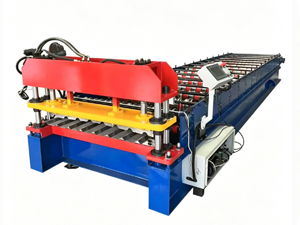
What Is a Roof Tile Forming Machine? Buyer's Guide
If you are in the market for a roll forming machine and need to produce roof tiles at scale, you have probably come across the term "roof tile forming machine." This guide explains what it is, how it differs from standard corrugated lines, what components drive quality output, and what to consider when evaluating options.
What Is a Roof Tile Forming Machine?
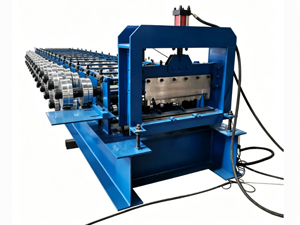
A roof tile forming machine is a specialized type of cold roll forming equipment designed to shape metal coils—typically galvanized steel, Galvalume, or color-coated steel—into interlocking roof tile profiles. The resulting panels mimic the appearance of traditional clay or concrete tiles but weigh a fraction of the material, making them ideal for both residential and industrial roofing applications.
Unlike plain corrugated sheets, roof tile profiles feature a curved or angular cross-section that provides superior water-shedding and aesthetic depth. A well-configured tile forming line can produce panels at speeds of 8–15 m/min, with material thickness ranging from 0.3 mm to 0.8 mm and yield strength up to 350 MPa.
Key Components of a Roof Tile Forming Machine
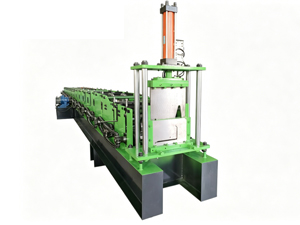
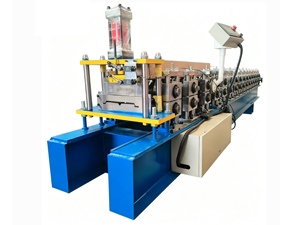
Understanding the anatomy of the machine helps you ask better questions when comparing options. The decoiler (hydraulic or manual, 5–10 tonne capacity) unwinds and feeds coil into the line. The forming station (12–24 roller sets depending on profile) gradually shapes flat strip into tile geometry. Rollers use GCr15 bearing steel providing HRC58–62 surface hardness for wear resistance. Shafts run Ø70–90 mm (single or splined) to support rollers under high-speed load. The cutting system (hydraulic shear or flying saw) cuts panels to exact length without stopping the line. The PLC control (Siemens, Delta, or Mitsubishi) manages speed, cutting, and fault monitoring. The profile die (custom per tile design) determines final cross-section geometry.
Glazed Tile Forming Machine: A Premium Variant
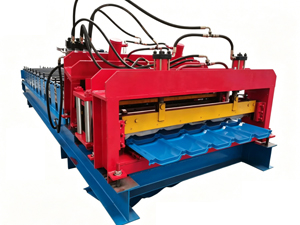
A glazed tile forming machine is a subset of roof tile lines that produces double-layer panels: a steel base with a factory-applied colored glaze on the visible surface. The result combines the strength of metal with the aesthetic finish of painted tiles—no on-site painting required.
Glazed tile lines require tighter tolerances and often include a pre-heating stage or coating oven. If your target market values aesthetics (residential projects, resorts, heritage-style builds), the glazed variant commands a higher market value but a stronger margin per panel.
What Drives Machine Configuration?
When evaluating a roof tile forming machine, several key variables determine the configuration level. The number of forming stations affects profile accuracy and cost—more stations mean better quality but higher investment. Roller material (GCr15, HRC58–62) affects roller life and surface finish quality. Shaft diameter (Ø70–90 mm) determines rigidity at speed and resistance to profile drift. The PLC brand (Siemens, Delta, Mitsubishi) governs diagnostics quality and maintenance accessibility. The cutting system (hydraulic shear vs flying saw) trades cost against throughput. Custom dies versus catalog profiles affect lead time and geometry precision.
How to Choose the Right Machine for Your Project
Before requesting a configuration proposal, clarify these requirements:
Target profile—Do you need a specific tile shape (e.g., Spanish S-tile, Japanese flat tile)? Share a cross-section drawing or sample.
Material specifications—Coil width, thickness range, and steel grade (Galvanized GI, Galvalume GL, or PPGI).
Production volume—Daily shift output targets will determine forming speed and decoiler capacity.
Power supply—Verify voltage and frequency (380V/50Hz/3-phase is standard; confirm with your local grid).
After-sales support—Ask about warranty terms, remote diagnostics via PLC, and whether the manufacturer sends a technician for installation and training.
Maintenance Basics
Like any roll forming equipment, roof tile machines require regular lubrication of roller bearings, inspection of shaft alignment every 3–6 months, and replacement of worn roller shells when surface hardness drops below HRC56. Keeping a log of production runs and dimensional checks will extend service life significantly.
Common Applications
Roof tile forming machines produce profiles used in residential housing developments, agricultural warehouses and barns, commercial buildings and factories, resorts and architectural projects requiring decorative roofing, and prefabricated modular housing.
Frequently Asked Questions
What is the difference between a roof tile forming machine and a corrugated forming machine?
Roof tile machines produce a curved or angular interlocking profile with greater cross-sectional depth, giving panels a three-dimensional tile appearance. Corrugated machines create a simple wave pattern. Tile profiles require more forming stations and tighter tolerances.
Can a single machine produce multiple tile profiles?
Some manufacturers offer quick-change roller sets or dual-profile lines. A double-layer roll forming machine can switch between two tile profiles on the same base machine, reducing factory floor space.
What material thickness can a standard roof tile forming machine handle?
Most machines handle 0.3 mm to 0.8 mm, depending on the roller gap setting and material yield strength. Thicker coils may require a heavier-duty line with reinforced shafts.
How long does it take to set up a new tile profile?
With a custom die, lead time is typically 15–30 days for manufacturing and 3–5 days for die installation and commissioning on-site. Standard catalog profiles ship faster.
Is a glazed tile forming machine worth the extra investment?
If your market demands aesthetically finished tiles without post-painting, the glazed line eliminates a downstream step and commands a higher market value per panel. Run a margin analysis based on your target market before deciding.
Conclusion
A roof tile forming machine is a precision investment that can transform a metal coil operation into a high-value roofing panel supplier. The key is matching the machine configuration—roller count, PLC brand, cutting system, and die design—to your actual production requirements rather than paying for oversized capacity you will not use.
If you are evaluating suppliers, Tianyu offers custom tile forming lines with GCr15 rollers, Siemens PLC control, and full after-sales technical support. Reach out with your profile drawings and production targets for a detailed configuration proposal.
Sources: ASTM E1514-98(2017) Standard Specification for Stainless Steel Roof Drainage Systems; MCA (Metal Construction Association) Metal Roof Systems Design Manual; SAE International Roll Forming Process Specification SAE J2465; ISO 9044:2014 Continuously Hot-Dip Coated Steel Strip and Sheet — Tolerances on Dimensions and Shape.






 首页
首页 产品
产品 联系
联系
