

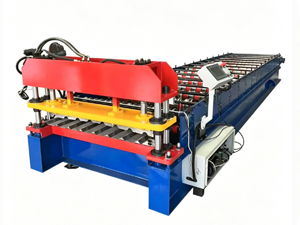
Roof and Wall Panel Roll Forming Machine: Manufacturer's Guide to Production Efficiency
Roof and wall panels made from profiled steel are a fixture of modern construction. Shopping centers, industrial sheds, agricultural storage facilities, and even residential roofs in many parts of the world use them. Behind every meter of that ribbed or trapezoidal steel sheeting is a roll forming line that had to be designed, assembled, and debugged by a manufacturer. This article looks at how those machines work from the factory floor perspective, and what buyers should understand before purchasing.
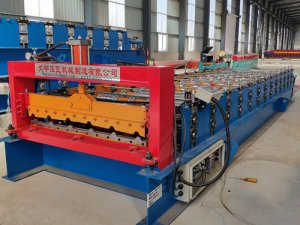
The Role of Roof and Wall Panels in Construction
Profiled steel panels serve two main functions: weatherproofing and structural support. A well-designed roof panel sheds water efficiently, resists wind uplift, and handles foot traffic during installation. Wall panels provide the building envelope that keeps out rain, wind, and dust while contributing to thermal and acoustic performance when combined with insulation.
The profiles themselves—trapezoidal, corrugated, ribbed, or sinusoidal—increase the panel's stiffness without adding weight. That is the core engineering principle: use less material to achieve the same structural performance, which brings cost savings across the entire building lifecycle.
How These Machines Are Built
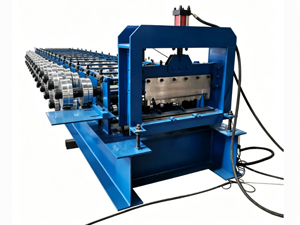
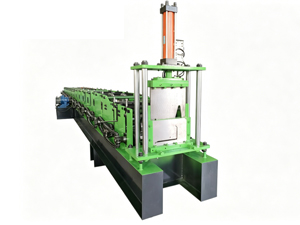
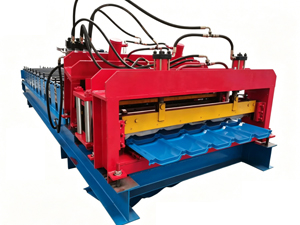
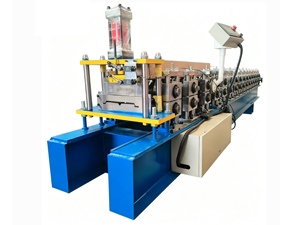
A roof and wall panel roll forming line is typically modular. The core is the roll former—a heavy steel frame housing a series of roller stands. Each stand contains a pair of rollers that progressively shape the flat strip into the target profile. The number of forming stations varies by profile complexity; a simple corrugated sheet may need 10 to 12 stations, while a complex ribbed wall panel with stiffening folds can require 20 or more.
The machine also includes a pre-cut decoiler, a entry guide table to keep the strip aligned as it enters the rollers, the forming section, a cutting unit (usually hydraulic shear), and a collection table. For factories producing both roof and wall panels, some manufacturers supply machines with interchangeable roller sets so one line can produce multiple profiles without purchasing separate equipment.
Choosing a Profile: Why It Matters for Production Planning
The most common roof panel profiles are trapezoidal and corrugated. Trapezoidal panels have a higher rib height relative to their pitch, which gives them greater load-carrying capacity per unit weight. Corrugated panels have a simpler wave profile and are easier to form at high speed, making them popular for high-volume production runs.
Wall panels often use a ribbed or box profile with wider flat areas between ribs. The flat areas make it easier to attach cladding, insulation, or internal linings. When sourcing a machine, confirm that the roller set matches the exact profile specification your projects require. A machine designed for one profile cannot easily be retooled for a significantly different geometry without a full roller replacement.
Material Considerations for Factories
Most roof and wall panel lines process galvanized steel coils (Zinc coating Z275 or Z450), galvalume coils (AZ150), or color-coated (pre-painted) coils. Material thickness typically ranges from 0.3mm to 0.8mm for wall panels and 0.4mm to 1.0mm for roof panels. Using the wrong thickness range will damage the rollers and produce distorted panels.
Coil width is another constraint. The machine's maximum forming width determines the panel coverage width you can offer to customers. Standard widths are 760mm, 820mm, 840mm, and 1000mm after corrugation. A factory that needs 1,000mm wide panels needs a machine built for that width, not a standard model.
Speed, Throughput, and the Reality of Factory Efficiency
Manufacturers often advertise production speeds in meters per minute. Do not let that number be the only factor in your decision. Sustained throughput matters more than peak speed. A machine that runs at 30m/min but requires constant operator adjustment, frequent material jams, and hourly cleaning is less productive than a machine that steadily runs at 20m/min all day without interruption.
In practice, the bottlenecks are usually not in the roll former itself. They are upstream (decoiler loading time, coil changeover) and downstream (panel stacking, bundling, and strapping). Factories that invest in auto-stacking equipment and quick-change decoilers see dramatic improvements in overall line efficiency even if the roll former speed stays the same.
What to Ask a Manufacturer Before Ordering
Before signing a purchase agreement with any manufacturer or supplier, ask for the following:
A reference list of at least three existing customers running the same profile configuration. Call them. Ask about downtime, roller wear rates, and whether the supplier honored the warranty. Request the machine's dimensional tolerance specifications in writing. A quality manufacturer should guarantee profile tolerance of ±0.5mm over a 10-meter run. Confirm the roller material and hardness specification. For high-volume production, ask about the availability and lead time for replacement rollers.
Check what after-sales support looks like. Some manufacturers offer remote diagnostics via internet connection, which can be a lifesaver if the machine develops a fault at 2am before a big delivery. Others expect you to troubleshoot with a manual. The difference in support quality is often the deciding factor between one supplier and another.
Running the Line: Operator Best Practices
Even the best machine performs poorly with a disengaged operator. Establish a morning checklist: inspect roller surfaces for debris, verify hydraulic fluid levels, confirm the cutting blade edge is sharp, and check that the entry guide is centered. Train operators to listen for unusual noise during the first 30 minutes of each shift—that is when most problems announce themselves before causing damage.
Record yield rate and waste percentage per shift. High waste often points to a dull cutting blade or incorrect roller pressure rather than material quality issues. Addressing root causes quickly keeps the production cost per panel competitive.
Sourcing Smart: Finding the Right Supplier
The global market for roll forming equipment includes large industrial manufacturers with decades of history and smaller workshops that assemble machines from purchased components. Both can be legitimate. The key is matching your requirements to the supplier's actual experience. If you need a machine for 0.8mm thick galvalume roof panels, find a supplier who has built lines that specifically handle that material. General-purpose machine builders may produce a functional machine, but one optimized for your exact application will deliver better results from day one.
References
Steel Construction Institute. Design of Lightweight Steel Roof and Wall Cladding. SCI Publication P292. Ascot: SCI, 2019.
American Society of Civil Engineers. ASCE 7-22: Minimum Design Loads and Associated Criteria for Buildings and Other Structures. ASCE, 2022.
International Iron and Steel Institute. Galvanized Steel Sheet for Construction Applications: Technical Guidelines. IIS, 2017.
European Committee for Standardization. EN 1090-2: Execution of Steel Structures and Aluminium Structures — Technical Requirements for the Execution of Steel Structures. CEN, 2018.
Sheet Metal and Coil Storage Association. Best Practices in Coil Handling and Roll Forming Line Setup. SMCSA, 2020.
This article is intended for factory managers, procurement professionals, and industry stakeholders seeking information about roof and wall panel roll forming equipment.






 首页
首页 产品
产品 联系
联系
